

The Ebola outbreak in eastern Congo is now the fastest-growing one in history, and new challenges keep emerging even as work begins on a study of two badly needed treatments for a type of Ebola that currently has none.
A strike this week by unpaid workers at an Ebola treatment center at the heart of the outbreak could light the flame for others in a remote region already suffering from bare-bones infrastructure, rebel threats and misinformation asserting that the deadly virus isn’t real.
Nearly 2,000 cases, including 702 deaths, have been confirmed. Now cases are suspected in two more provinces, including one of Congo’s largest cities, Kisangani, as responders struggle to understand how far Ebola has spread. Experts have said the outbreak was missed for weeks because tests were conducted for a more common type of Ebola, and its origin is still not known.
Here’s a look at the outbreak and the growing effort to contain it.
The outbreak is caused by the Bundibugyo virus, a type of Ebola that has no approved vaccines.
Ebola is highly contagious and can be transmitted to people from wild animals. It spreads in the human population through contact with bodily fluids such as vomit, blood or semen, and with contaminated surfaces and materials such as bedding and clothing.
Traditional funerals in which loved ones wash and prepare bodies have been restricted, to some anger by residents.
The disease is rare but severe and often fatal. Symptoms include fever, vomiting, diarrhea, muscle pain and at times internal and external bleeding. Outbreaks often occur in remote villages in Central Africa, near rainforests.
Associated Press journalists have witnessed the aftermath of attacks on health centers by a wary, highly mobile population that has long been traumatized by armed groups.
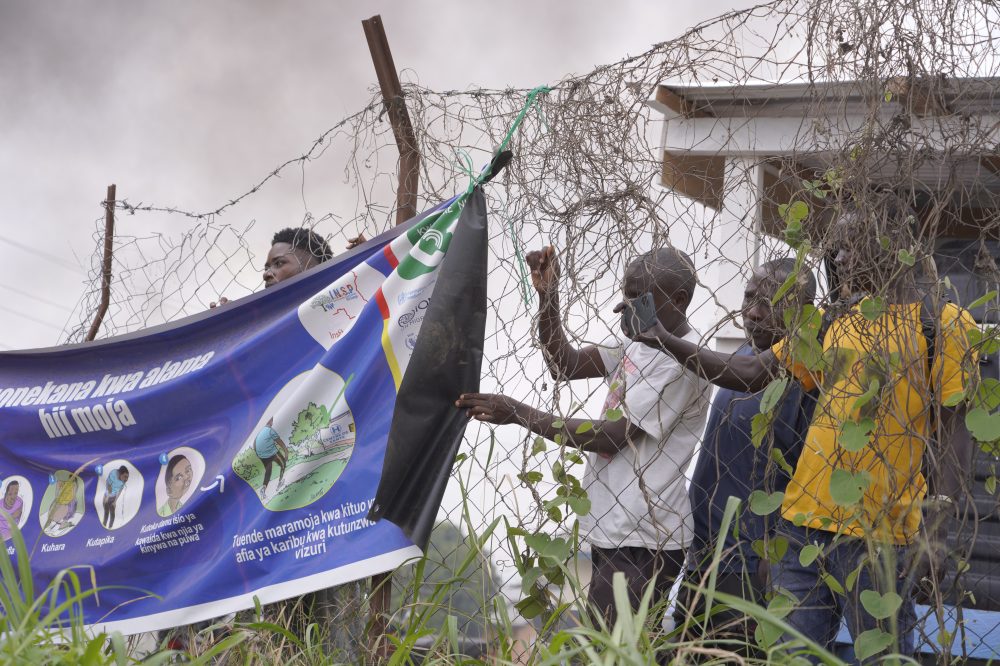
Outsiders can be looked upon with suspicion, and community outreach teams have worked to spread the word about Ebola prevention measures in the face of abuse and accusations that the outbreak is a scam.
Part of the outbreak is unfolding in a major city and humanitarian hub, Goma, that rebels backed by neighboring Rwanda seized over a year ago, further complicating the response.
Now there is unrest among local Ebola responders themselves after weeks of risky crisis work and little or no pay from the Congolese government. On Monday, staff at a treatment center in Ituri province, the outbreak’s epicenter, closed the facility and blocked access, burning a tire. Striking staffers included epidemiologists, case investigators, drivers and gravediggers.
Congolese officials have said they are in talks with the health workers to find a solution. A labor strike that spreads to other overstretched and underequipped facilities would be another serious blow to Ebola containment efforts.
The strikes come at a vulnerable time. Earlier this month, researchers began a study of two possible Ebola treatments and began enrolling participants.
One is Gilead Sciences’ remdesivir, a broad-acting antiviral approved to treat COVID-19 that has shown some hints in lab tests that it may help fight the Bundibugyo virus. The other is Mapp Biopharmaceutical’s experimental MBP134, antibodies engineered to target Ebola viruses including Bundibugyo.
The World Health Organization has said patients will be randomly assigned to receive today’s best standard of care as well as remdesivir, MBP134, both or neither.
The United Nations body has warned it could take months and possibly as many as 1,000 study participants to tell if either drug works.
Currently the study is offered in just one Ebola treatment center in Ituri province — not the one where the strike has begun. Officials plan to expand the study to other locations once it is safe to do so.
——-
For more on Africa and development: https://apnews.com/hub/africa-pulse
The Associated Press receives financial support for global health and development coverage in Africa from the Gates Foundation. The AP is solely responsible for all content. Find AP’s standards for working with philanthropies, a list of supporters and funded coverage areas at AP.org.
Brought to you by www.srnnews.com