


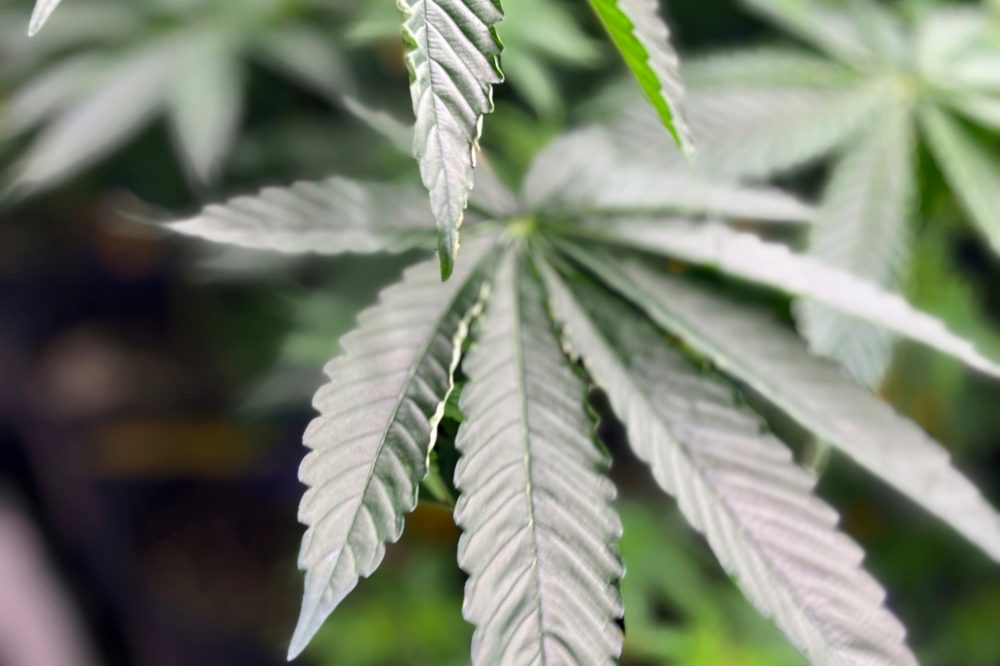
President Donald Trump has directed his administration to work as quickly as possible to reclassify marijuana as a less dangerous drug.
Trump’s executive order on Thursday does not legalize marijuana under federal law. And it’s not the final word. The proposed change still requires federal regulatory approval.
But the change could make the marijuana industry more profitable, facilitate new research on medicinal uses and nudge federal policy closer to a more tolerant approach already in place in many states.
Possessing marijuana is a federal crime punishable by fines and prison time. Selling or cultivating marijuana is a more serious offense, punishable by prison sentences of five years to life, depending on the quantity of the drug. That would not change.
Rather, Trump is proposing to reclassify marijuana from a Schedule I drug, alongside heroin and LSD, to a less dangerous Schedule III substance, which includes such things as ketamine and some anabolic steroids.
The federal government defines a Schedule I drug as having no accepted medical use and a high potential for abuse. Schedule III drugs are defined as having moderate to low potential for physical and psychological dependence.
The U.S. Justice Department had proposed to reclassify marijuana under President Joe Biden, eliciting nearly 43,000 formal public comments. The Drug Enforcement Administration was still in the review process when Trump succeeded Biden in January, triggering a re-examination of the policy.
Trump said he has long taken a just-say-no approach to drugs.
“I’ve always told my children, ‘Don’t take drugs, no drinking, no smoking,’” Trump said at a White House event Thursday.
But he added: “At the same time, the facts compel the federal government to recognize that marijuana can be legitimate in terms of medical applications when carefully administered.”
Trump said he has been swamped with calls urging him to make marijuana more accessible for people struggling with health problems such as severe pain.
“This reclassification order will make it far easier to conduct marijuana-related medical research, allowing us to study benefits, potential dangers and future treatments,” Trump said.
His executive order directs the attorney general to “take all necessary steps” to complete the rule-making process to reclassify marijuana as a Schedule III drug “in the most expeditious manner” allowed under federal law.
Federal income tax deductions for business expenses aren’t available to enterprises involved in “trafficking” any Schedule I or II drug.
Changing marijuana to a Schedule III drug could save hundreds of millions of dollars in taxes for businesses licensed to sell marijuana in states where it is legal, said Rachel Gillette, a Denver attorney at Holland & Hart who leads the firm’s cannabis industry practice.
Reclassification could allow marijuana businesses to claim tax deductions for expenses such as advertising, marketing, rent or labor costs associated with sales, she said.
Though some marijuana advocates would prefer it to be fully legalized, “I think the industry is willing to take whatever incremental steps they can in order to put themselves in a better financial position,” Gillette said.
Opponents of the change say that’s cause for concern.
“My worry is that we will supersize the commercialization of this industry, which is going to lead to more people using and more damage,” said Kevin Sabet, a former drug policy adviser under President Barack Obama who now is CEO of the group Smart Approaches to Marijuana.
Support for marijuana legalization has grown significantly over the past several decades, from just 23% support in 1985 to 64% this year, according to polling from Gallup.
But that’s down from 70% support just two years ago, primarily because of declining enthusiasm among Republicans.
Support among Republicans for legalizing marijuana dropped from 55% to 40% since 2023, Gallup said. By comparison, support shifted only slightly among Democrats, from 87% to 85% during that same period, and inched down from 69% to 66% among independents.
More than 20 Republican U.S. senators, several of them staunch Trump allies, had signed a letter this year urging the president to keep marijuana a Schedule I drug. They asserted that marijuana remains dangerous and argued that reclassifying it would “undermine your strong efforts to Make America Great Again.”
The medical use of marijuana already is allowed in 40 states and Washington, D.C. Over the past dozen years, the number of jurisdictions legalizing recreational marijuana for adults rose rapidly to 24 states and Washington, D.C.
As more states have embraced marijuana, more people have used it.
More than 64 million Americans age 12 and older — 22% of people — used marijuana during the previous year, according to a 2024 national survey released earlier this year by the federal Substance Abuse and Mental Health Services Administration. That was up from 19% of people in 2021.
Reclassifying marijuana could cause that figure to keep growing.
“The biggest impact would be further normalizing marijuana use, especially among our young people,” Sabet said.
___
Brought to you by www.srnnews.com