

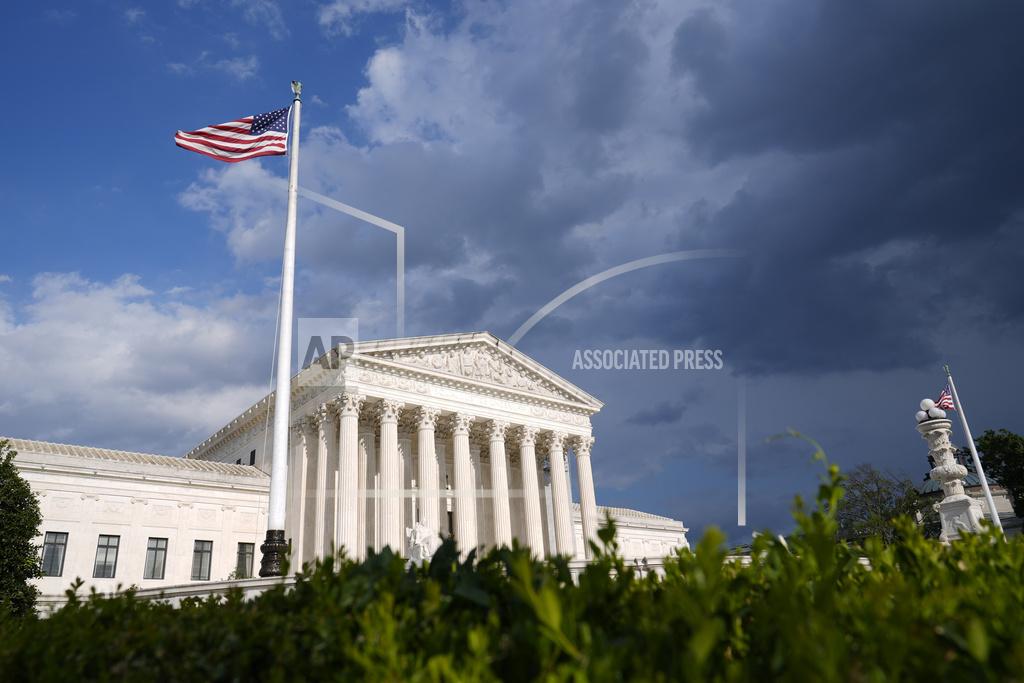
WASHINGTON (AP) — The Supreme Court is hearing arguments on Wednesday over whether President Trump’s order, signed on Jan. 20, 2025, his first day back in office, comports with the post-Civil War 14th Amendment and an 86-year-old federal law that has been widely understood to make citizens of everyone born in the country, with narrow exceptions for the children of foreign diplomats and invading armies. Every court to have considered the issue has found the order to be illegal and prevented it from taking effect.
The call to repeal birthright citizenship is part of the Trump administration’s broader crackdown on immigrants that has included stepped-up deportations and reductions in the number of refugees allowed into the U.S., suspension of asylum at the border.
The case presents another test for a high court that has allowed some anti-immigration efforts to continue, after lower courts had blocked them. The case before the court comes from New Hampshire, where U.S. District Judge Joseph N. LaPlante ruled that the order “likely violates” both the Constitution and federal law.
The first sentence of the 14th Amendment, the Citizenship Clause, makes citizens of “all persons born or naturalized in the United States, and subject to the jurisdiction thereof.” The case turns on the meaning of the final phrase about jurisdiction, which also was used in citizenship laws enacted in 1940 and 1952.
Trump’s view, asserted in the order titled “Protecting the Meaning and Value of American Citizenship” and backed by some conservative legal scholars, is that people here illegally or temporarily are not “subject to the jurisdiction” of the United States and therefore their U.S.-born children are not entitled to citizenship.
The court should use the case to set straight “long-enduring misconceptions about the Constitution’s meaning,” Solicitor General D. John Sauer wrote.
In that regard, Sauer likened the case to the seminal 1954 decision in Brown v. Board of Education, which outlawed segregation in public schools, and the landmark 2008 Heller case, which declared that people have a constitutional right to keep guns for self-defense.
Brought to you by www.srnnews.com