


‘Israel Is a Uniquely Powerful Living Lab for the Future of Mental Health,’ Alma Ventures Founder Tells TML
Matalon explained that advances in neuroscience, biomarkers, artificial intelligence, and real-world data are creating new possibilities to detect patterns earlier and understand which treatments work best for different people
By Maayan Hoffman / The Media Line Staff
Adi Ostry Matalon has a big heart and an even bigger vision, all packed into a petite frame. And somehow, this redheaded woman, with an outsized personality and matching determination, may be poised to change Israel’s mental health landscape and, ultimately, the world’s.
After nearly two decades working across finance, strategy, innovation and investment, Matalon has turned her attention to what she sees as the next major transformation in mental healthcare.
“I see Israel as a uniquely powerful living lab for the future of mental health, where world-class healthcare and technology meet an extraordinary depth of lived experience,” she told The Media Line. “Israel didn’t choose this reality, but it chose how to respond to it. That resilience, the ability to turn an unprecedented challenge into innovation, action, and solutions.”
She said this is the same mindset that made Israel the Startup Nation, and today, the country has an opportunity to bring that entrepreneurial spirit to mental health.
“Entrepreneurs are not only building solutions; many are living the very challenges they are trying to solve,” she told The Media Line. “This combination of scientific excellence, technological innovation, healthcare infrastructure and lived experience creates a rare environment for developing, testing and refining solutions with global relevance.”
Matalon explained that advances in neuroscience, biomarkers, artificial intelligence and real-world data are creating new possibilities to detect patterns earlier, understand which treatments work best for different people and measure outcomes with increasing precision.
“This is not simply a technology opportunity. It is an opportunity to redesign the way mental healthcare works,” she said. “For decades, mental health has been treated largely through observation, interpretation, and trial and error. We now have the tools to change that.”
Matalon sees herself as a connector, someone who can bring together the people, technologies, and resources needed to turn that vision into reality. But her journey into mental health began with the events of October 7, 2023.
When Hamas attacked Israel, Matalon was living in Los Angeles with her husband and three children, now 13, 11, and eight. She had built a successful career in banking and investment. But as she watched the events unfold, she quickly understood that the people affected would not be limited to those living in the Gaza envelope. This was a national tragedy, she realized, and the trauma would reach far beyond the communities directly attacked. It would require an immediate and far-reaching response.
She packed up her family and returned to Israel, even as the war was raging.
“I came back with the understanding that the trauma is national,” Matalon said. “It’s not something that happened for one circle or a second, but actually for everyone. I remember talking to my friend when I was in LA, and she told me she was sleeping with a knife under her pillow. That struck me, and I felt I needed to come back to do something.”
At first, however, Matalon was not entirely sure what that something would be.
In December 2023, she organized a webinar bringing together start-up companies and investors from around the world. Investment capital was disappearing as a result of the war in Gaza, and she wanted to help Israeli companies find the support they needed. Around 50 investors participated, and the event was a success.
That experience sparked another idea. Matalon assumed there were already successful mental health technology companies operating abroad, and she began exploring how to bring their solutions to Israel to help people struggling with the psychological impact of the war. But the companies proved harder to find than she expected. Even when she identified promising technologies, adapting them from one country and culture to another proved even harder.
“No one here in Israel was able to implement it at the time; nobody really knew what to do,” Matalon said.
In hindsight, she added, it was simply too early, and the trauma was still too raw.
But the experience helped her realize that Israel needed something more fundamental. Before new mental health technologies could be widely introduced, the country needed the infrastructure to support their development, adaptation and implementation. And that is exactly what she set out to build.
Matalon was already connected to Sderot, just one kilometer from the Gaza border. For decades, it had been known as one of Israel’s most traumatized cities, a place where children grew up with only seconds to run into bomb shelters when rockets were fired from Gaza.
Even before October 7, Sderot had set a goal of bringing technology to the city to support its residents, strengthen its economy and explore how innovation could improve mental health and resilience.
About a year after October 7, the city launched the Resilience and Health Innovation Hub, known as the RISE Hub (Resilience Innovation Sderot Ecosystem), to leverage the region’s “unique reality,” which community leaders believe can help drive the development of cutting-edge technologies in mental health and communal resilience. The idea is that Sderot can provide an ideal environment to develop and test these technologies in a rapidly growing global market.
Matalon helped turn that vision into a strategy.
“Sderot has a vision very similar to what I was describing,” she explained. “They are looking at how they can really build a technology hub and bring in innovation, but also help the people. It is not just about technology for technology’s sake. They want to bring the technology to the people, to the patients.”
Matalon worked with the Directorate of Defense Research and Development of the Defense Ministry (Maf’at), Sheba Medical Center and other organizations, bringing them together to help take the city’s vision to the next level.
At least a third of Sderot’s 40,000 residents have used services provided by the local Sderot Resilience Center, creating a unique foundation for trauma research and treatment, Igal Bracha, head of the Economic and Employment Development Directorate for the Sderot Municipality, told the author in an interview for the book Traumatech Nation. The goal is to turn Sderot into a center for mental health technology innovation, “bridging urgent global needs with technological excellence,” as the hub’s website explains.
The resilience center, known in Hebrew as a merkaz hosen, provides psychological and other mental health services to Sderot residents.
Today, the hub is already home to a range of resilience and mental health technology companies. Hundreds of companies have engaged with the initiative, dozens have completed its initial program, and several still operate out of Sderot.
“In like 10 years, Sderot will be a place that people come to learn about resilience,” Matalon said, noting that the goal is to develop the world’s first “city of resilience.”
“The people, the community of Sderot, is so much more resilient than any other place, and we need to ask ourselves why, what happened there that didn’t happen in other places. So we established the hub, and we are working on an even bigger strategy.”
But Matalon’s work did not stop in Sderot. She also began looking at how technology and data could help communities across southern Israel recover from the trauma of October 7.
She started working with the Kibbutz Movement to develop an initiative focused on recovery within the kibbutzim themselves.
The government and nongovernmental organizations were already pouring money into southern Israel to support recovery and rebuilding. But Matalon believed funding alone wouldn’t be enough. To recover better, communities needed to understand their changing needs, track which interventions were working, and identify where additional support was required.
Together with local leaders, she is now spearheading the development of a data collection tool to map individual community needs and help determine which projects, technologies and other interventions would be most beneficial.
She explained that the tool will ultimately belong to the communities, allowing them to monitor progress over time and identify when certain services are no longer needed or when new needs emerge.
“This is something we are going to measure for a long time,” Matalon told The Media Line. “I don’t think there is any other initiative that really measures the data of what’s happening in the community and resilience, and I think the data is one of the things that are most important today in technology in general.”
Trauma, she stressed, is not a snapshot in time. Recovery can take years, even decades, and what people need for recovery can change along the way. She believes technology can help professionals better understand that process and respond more effectively.
“One-hundred and fifty years ago, with medicine in general, you went to a doctor, and he would feel your forehead and check for a fever and ask what hurts,” Matalon recalled. “He would observe you and base his diagnosis on what you were telling him. His guess might work, or it might not. Technology changed a lot of that. But mental health diagnoses still work like that a lot today, certainly psychiatry. It is definitely going to change with science and new technological solutions.”
As Matalon continued building connections between researchers, technology companies, healthcare providers and communities, another idea began to take shape. If Israel was going to become a global leader in mental health innovation, why not create a venture capital fund dedicated specifically to supporting that vision?
She found a partner in Esther Barak Landes, and together they are building Alma Ventures, which they envision as Israel’s first venture capital fund focused exclusively on wellness and mental health technologies.
But Matalon said the goal goes beyond investing in promising companies. She wants to support the startups themselves and help build the broader ecosystem they need to succeed.
“In the end, if you want to build innovation solutions, you need to build an ecosystem around them, from research to global scale,” Matalon said.
Alma Ventures will operate as a venture capital fund and philanthropic platform dedicated to advancing breakthrough mental health technologies that improve lives in Israel and worldwide.
Its model is unusual because it combines traditional venture investing with philanthropy, allowing it to support companies through both financial investment and broader ecosystem development. Returns from successful investments could also fund future innovation.
“Alma Ventures is not just a fund,” Matalon stressed. “First of all, we brought the most amazing people to lead in this ecosystem. That, I think, was my biggest success … In addition, we are really supporting the companies and helping them build bridges, also to the global world, because I think that our story here in Israel is something that also needs to be told outside.”
And increasingly, Matalon is taking that story beyond Israel’s borders herself.
In recent months, she has begun lecturing about Israel’s emerging mental health innovation ecosystem and the entrepreneurs who have transformed their own experiences of trauma into technologies designed to help others.
The concept is known as post-traumatic growth, or PTG, a term developed by psychologists Richard Tedeschi and Lawrence Calhoun in the 1990s. It describes the phenomenon in which people who experience significant trauma or distress may also undergo positive psychological changes as they struggle with its aftermath. These changes can include a new outlook on life, stronger relationships and a deeper sense of meaning and purpose.
“They didn’t choose for this to happen, but they chose how to react,” Matalon said. “They chose to use innovation as part of their own healing process, and that is an important message we need to bring to the world.”
Matalon believes mental and brain health will undergo enormous changes over the next decade, driven in part by advances in artificial intelligence and the growing economic and social costs of mental illness, particularly in Western countries.
The World Health Organization estimates that hundreds of millions of people worldwide live with depression, affecting roughly 5% of the adult population, according to data updated as recently as September 2026. According to a separate report by the World Economic Forum, the global economic cost of mental health conditions could reach $6 trillion by 2030, exceeding the projected costs of cancer, diabetes and respiratory diseases combined.
For Matalon, these figures reinforce the urgency of developing new approaches to mental healthcare.
She remains remarkably humble. Matalon blushes when she talks about herself, although she knows she is onto something important.
For the first two years, she said, almost nobody understood what she was trying to accomplish, including members of her own family. Much of the work was voluntary, and she invested enormous time and energy in building something that still lacked a clear shape.
“Nobody understood,” she told The Media Line. “It was really building the first steps.”
She said the constant travel and long hours meant missing important time with her husband and children. But today, she believes they are proud of what she has accomplished.
“I think we are in a shift that is really bringing people together, heart to heart,” Matalon said. “Mental health is not just a health problem; it’s education, it’s well-being, it’s elderly, it’s so many things. It’s not just one solution for one problem. It’s something totally different. I don’t know yet what it will be, but it’s to take a different approach to this problem that I don’t think any other country has done before.”
Matalon said that she tends to see possibilities before others do. She connects dots that may not yet seem related. What she enjoys most is bringing people together, helping them find common ground, and seeing what they can accomplish.
“If you believe in something and you want to do tikkun olam [repairing the world], just start in small steps, and the way will find you,” Matalon advised. “I have met the most amazing people along the way.”
And while Matalon may be small in stature, there is little question that over the past three years, she has taken some enormous steps toward the change she hopes to bring to Israel and the world.
This report is part of Traumatech, a series developed and created by Maayan Hoffman and debuting on The Media Line. The series explores how Israel is building and exporting breakthrough mental health technologies that can transform life at home and bring hope to communities worldwide.
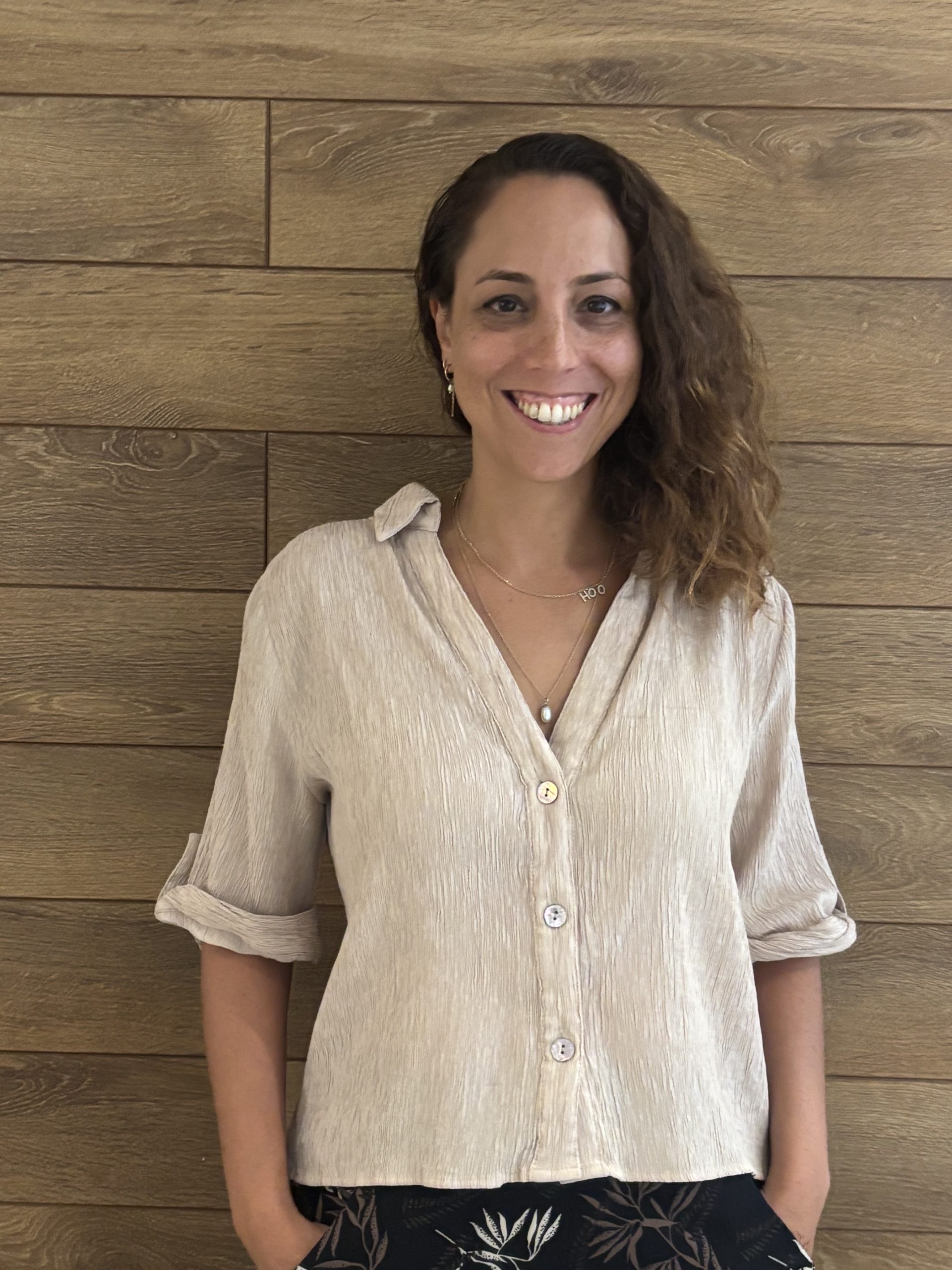
Adi Ostry Matalon founder ALMA Ventures. (Courtesy)
Brought to you by www.srnnews.com