

Christmas 2025 in the Middle East: How the Holiday Appears on Social Media
Posts from Bethlehem, Gaza, Damascus, Dubai, and beyond show celebration, strain, and political messaging unfolding side by side
By Steven Ganot / The Media Line
As Christians marked Christmas on December 25, 2025, social media from the Middle East offered a revealing snapshot of how the holiday is lived, contested, and reframed in a region shaped by war, political polarization, and uneven stability. Posts ranged from joyful celebrations and cautious public worship to explicitly political messages and appeals for survival—often coexisting uneasily within the same feeds. Yet between the heavy posts, there were also moments of levity: jokes about seasonal traffic, long services, and December “Christmas vibes” in places where Christmas is more aesthetic than religious.
The Holy Land: Celebration and Protest Side by Side
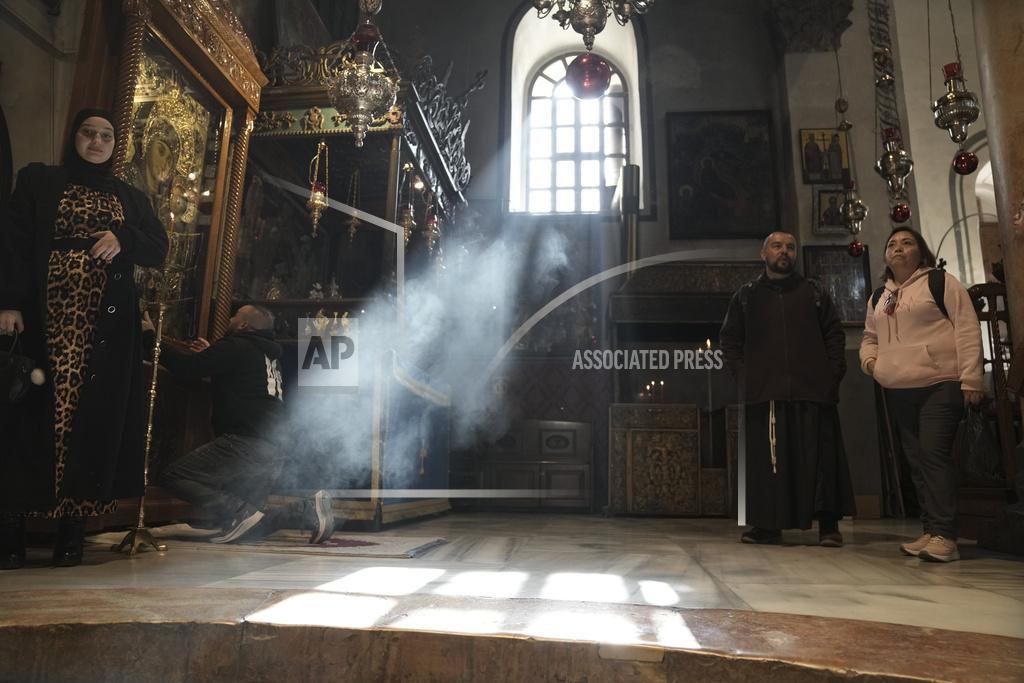
In Bethlehem, Christmas returned cautiously to public life. Videos of Midnight Mass at the Church of the Nativity showed packed pews, traditional hymns, and a tone of continuity rooted in place and ritual.
https://www.youtube.com/watch?v=gMnOxCuvG_A
Alongside those scenes, official and humanitarian messaging framed Christmas through the prism of the war and its aftermath. The State of Palestine’s UN mission used Christmas posts to highlight Palestinian political claims and restrictions.
https://twitter.com/Palestine_UN/status/2003881162201329810
A few days before Christmas, US Ambassador to Israel Mike Huckabee and his wife Janet sent a video greeting to Palestinian Christians from Manger Square in Bethlehem.
https://twitter.com/USAmbIsrael/status/2002752286834237803
On Christmas Eve, they returned to Bethlehem—this time with their daughter, Arkansas Governor Sarah Huckabee Sanders, son-in-law Bryan, and grandchildren, who are visiting from Little Rock.
https://twitter.com/SarahHuckabee/status/2004205277860843551
Also on Christmas Eve, UNRWA Commissioner-General Philippe Lazzarini posted a seasonal greeting on X calling for relief, humanity, dignity, hope, and peace:
https://twitter.com/UNLazzarini/status/2003848190681030800
From Gaza, where the Christian population has dwindled sharply, residents shared messages of endurance more than celebration—often simple greetings paired with images of candlelit prayers and damaged streets.
https://www.youtube.com/shorts/cOF1bbvB7OY
Israel: Pluralism Under Strain, Plus the Usual Holiday Snark
In Israel, Christmas messaging reflected the country’s religious diversity and the shadow of conflict. Churches, municipalities, and community pages posted images from services and decorated streets in Jerusalem, Nazareth, Haifa, and Jaffa, with clergy and local voices emphasizing peace and stability.
https://www.instagram.com/reel/DSpV98rCRny/
At the institutional level, the Israel Defense Forces issued Christmas greetings to those celebrating—an outreach signal that circulated widely.
Syria and Lebanon: Public Joy, Private Anxiety
In Damascus, Instagram and YouTube were filled with reels of illuminated streets, Christmas trees, and crowded churches. The tone was upbeat—sometimes defiantly so—projecting an image of public normalcy.
https://www.instagram.com/p/DSskwKrjOv0/
https://www.youtube.com/shorts/Duyqf5resX8
Even celebratory posts often carried subtext—references to security, caution, and remembrance—underscoring that public festivity can coexist with private anxiety.
In Lebanon, Christmas discourse frequently turned confrontational. Many users used nativity imagery, church photos, and holiday greetings to deliver political accusation tied to Gaza and the broader regional conflict.
https://x.com/HadiNasrallah/status/2003879749316465036
Egypt: Anticipation, Recognition, and a Calendar Gap
In Egypt, where most Christians follow the Coptic Orthodox calendar, Christmas had not yet arrived. Coptic Christmas falls on January 7, and social media reflected that gap clearly. Rather than images of packed liturgies, posts focused on anticipation, public greetings, and the familiar refrain that “Christmas is coming—but not yet.”
Egyptian officials, journalists, and public figures posted early greetings acknowledging Christian citizens ahead of the January holiday, framing Christmas as part of Egypt’s national fabric rather than an event confined to one community.
https://x.com/Menavibes_/status/2003877683693080850
Sudan: Christmas Amid Collapse
In Sudan, where civil war has devastated much of the country, Christmas appeared online largely as lament and prayer. Church-linked and activist accounts shared images of displacement, damaged sanctuaries, and improvised worship, often accompanied by appeals for peace and survival rather than celebration.
https://twiiter.com/aciafricanews/status/2003936263968113151
Iraq and Iran: Minority Presence, Carefully Asserted
In Iraq, Christmas posts often centered on inclusion and visibility. Images and commentary circulated showing senior officials attending services, while Christian organizations documented celebrations in Baghdad and Ankawa as proof of continuity.
https://www.youtube.com/shorts/Ic8oQd3L814
In Iran, Instagram posts from Armenian Christian communities highlighted decorated churches and family gatherings, generally framed as cultural continuity rather than political claim-making.
https://www.instagram.com/p/CX7fnbRO996/
Cyprus: Calm Celebrations
In Cyprus, Christmas content looked closer to a familiar European pattern—church services, town squares, and family gatherings—especially in Greek Cypriot areas.
https://www.instagram.com/p/DSqBjKCDZ-v/?utm_source=ig_web_copy_link&igsh=MzRlODBiNWFlZA==
Some users contrasted the island’s calm celebrations with instability elsewhere in the region. Others kept it lighter, leaning into the perennial Mediterranean flex: warm sunny days in December.
https://www.youtube.com/shorts/FZ2w-OQHLQE
The Gulf and Turkey: Lifestyle Over Liturgy (and the “Not Christmas, Just Vibes” Genre)
In the United Arab Emirates, particularly Dubai, Christmas content was widely commercial and largely detached from politics: malls, hotel lobbies, towering trees, and seasonal markets.
https://www.instagram.com/p/DSrNZhLDG6h/
https://www.youtube.com/watch?v=ueoHg8f7-jI
In Turkey, Christmas appeared primarily as December décor and New Year’s-season culture—especially in Istanbul—often with a knowing, humorous edge about celebrating the “Christmas look” without the holiday itself.
https://www.instagram.com/p/DSGOHgyjR8D/
Pakistan: Quiet Recognition
In Pakistan, Christmas discourse was restrained but explicit in acknowledging Christian citizens. Journalists and officials posted greetings addressing “Christian brethren,” framing the holiday as part of a plural national identity.
https://x.com/PkPublicDiplo/status/2004082939521335515
One Holiday, Many Realities
Christmas in 2025 did not produce a single regional mood. In some places it was marked publicly; in others, it was postponed by calendar, constrained by security, or absorbed into political messaging. Social media reflected these differences with unusual clarity, placing celebration, protest, and quiet observance side by side.
What emerged was not a unified narrative but a layered one: Christmas as faith for some, as endurance for others, as symbolism or backdrop elsewhere. Together, the posts offered a snapshot of a region where even a global holiday is shaped less by the calendar than by circumstance.
Brought to you by www.srnnews.com