


Oct 21 (Reuters) – Tesla reported a surprise positive cash flow for the third quarter on Wednesday as it spent far less on its AI and robotics ambitions than analysts expected at a time when the EV maker is weighing a merger with CEO Elon Musk’s rocket company, SpaceX.
Tesla shares were up more than 1.7% in extended trading.
Capital expenditure in the third quarter came in at $4.73 billion, compared with the expectation of about $7.5 billion. That compares with $5.79 billion in the second quarter and $2.25 billion a year earlier.
Free cash flow in the September quarter came in at $1.53 billion, compared with an expectation of cash burn of $4.92 billion.
The company also beat Wall Street estimates for third-quarter revenue as a rebound in vehicle deliveries, helped by high gasoline prices, especially in Europe, and growth in its energy storage unit lifted sales.
Musk said on Tuesday that a merger between Tesla and SpaceX was a “good idea” and that the companies had formed special committees to discuss a deal.
The Austin, Texas-based automaker reported revenue of $28.05 billion for the three months ended September 30, compared with analysts’ average estimate of $27.88 billion, according to data compiled by LSEG. Revenue was $28.10 billion in the year-earlier quarter.
Tesla delivered 486,532 vehicles in the third quarter, beating Wall Street expectations of about 461,100 vehicles. Deliveries were down about 2% from a year earlier.
Deliveries outpaced production of 464,391 vehicles by more than 22,000 for a second straight quarter, resulting in an inventory drawdown. Wall Street expects about 1.77 million for 2026, according to Visible Alpha data.
Its core automotive business remains under scrutiny as rivals globally launch newer, often cheaper models, while Tesla leans heavily on the aging Model 3 and Model Y. It has said it passed 10 million vehicles delivered and that Model Y is on track to be the world’s best-selling vehicle this year.
To stimulate demand, Tesla has offered stripped-down, cheaper versions of both models and launched a six-seater Model Y in the United States in July. However, US demand was hit by the removal of tax credits last year.
Investors have been keen to see clearer evidence that Musk’s push into self-driving and robotics is moving from promise to commercial reality.
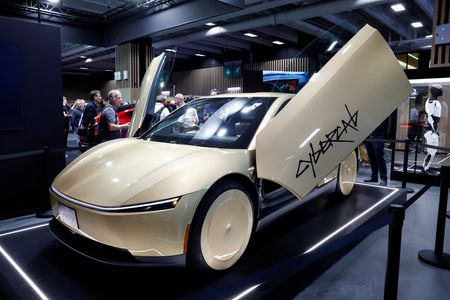
Tesla said earlier this month that its Cybercab fleet in Austin had grown from fewer than 40 vehicles to more than 300 in about a month, with Dallas next. It launched unsupervised robotaxi rides in the Florida cities of Miami, Orlando and Tampa in July, after launching in Dallas and Houston in April.
Tesla’s energy unit has become a key counterweight to the auto business, helped by demand for grid-scale batteries from renewable-power developers and data centers. Tesla has said the current tariff regime will hit its energy business harder than its auto business.
The company’s shares have fallen about 14% this year. At roughly $1.4 trillion, it remains the world’s most valuable automaker by a wide margin, reflecting investor expectations that self-driving software, energy storage, robotaxis and humanoid robots could eventually deliver higher-margin growth than vehicle sales.
(Reporting by Akash Sriram in Bengaluru and Abhirup Roy in San Francisco; Writing by Sayantani Ghosh; Editing by Pooja Desai and Matthew Lewis)
Brought to you by www.srnnews.com