


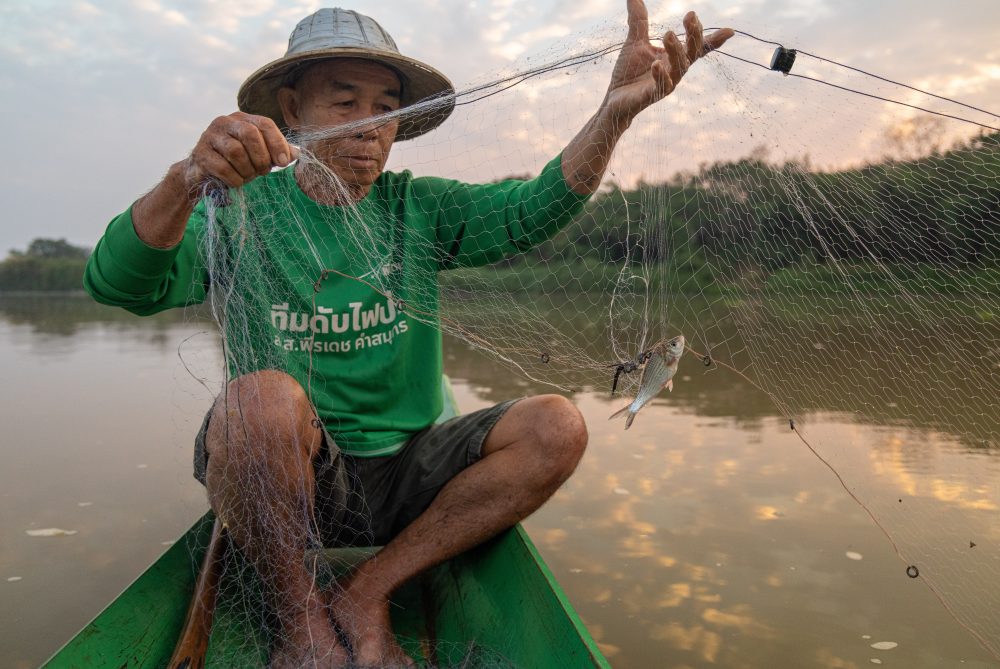
CHIANG SAEN, Thailand (AP) — A lone finger-length fish was a disappointing start to 75-year-old Sukjai Yana’s day. He recast his net from the bow of his long-tail fishing boat, slowly drifting towards the confluence of the Mekong and Kok rivers in northern Thailand.
Thailand is bearing the brunt as toxic runoff from rare earth mines in upstream Myanmar and Laos seep into the Mekong Basin, threatening millions who rely on its waters for farms and fisheries.
These heavy metal toxins imperil Southeast Asia’s globally important, multi-billion-dollar produce industry, backbone of its developing economies.
“The Mekong and Kok Rivers are both a source of food and income, which gives life to the people,” said Sayan Khamnueng of the Living Rivers Association. “The river contaminants are the biggest transboundary issue we’ve ever faced.”
Thailand’s response to the spreading problem has been limited to monitoring levels of heavy metals and educating communities about health risks. That raises concerns for Cambodia and Vietnam, downstream.
“If the contamination continues … the new generation (will) have to move to the city because they cannot continue their farmer’s life,” said Sangrawee Suweerakarn of the Romphothi Foundation, an advocacy group for the Shan ethnic group.
___
The Associated Press’ climate and environmental coverage receives financial support from multiple private foundations. The AP is solely responsible for all content. Find AP’s standards for working with philanthropies, a list of supporters and funded coverage areas at AP.org.
Brought to you by www.srnnews.com