


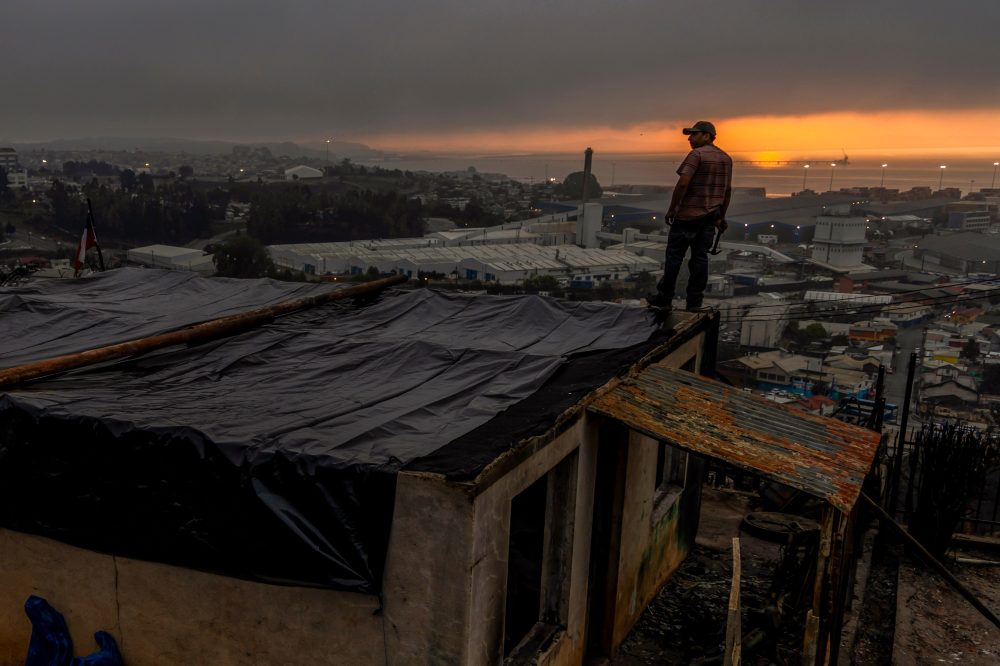
LIRQUÉN, Chile (AP) — The thick smoke hovering over the city is a grim reminder that the flames are still nearby. The devastating wildfires ravaging central and southern Chile show no signs of easing: they have already consumed about 450 square kilometers (170 square miles) of land and left at least 20 people dead, some 300 injured, tens of thousands evacuated, and an incalculable trail of destruction.
Some towns, like the small fishing village of Lirquén, are only just beginning to assess the impact, while others, just a few kilometers away, have watched helplessly as the fires advance, defying efforts by authorities, residents and firefighters.
“This was hell,” Pamela Crisostomo told The Associated Press. She managed to escape the blaze with only the clothes on her back and saw a lifetime of work destroyed in a matter of seconds.
Lirquén was ground zero for the inferno, which engulfed 80% of its land. It was here that the flames hit the hardest, leaving 17 of the 20 fatalities recorded so far.
On the dry vegetation that once covered the surrounding hills, some small fires remain active, although the bigger blazes are under control. With some 20,000 inhabitants, the town begins now to rebuild, largely supported by the solidarity of people in a country that has witnessed some of the world’s worst disasters.
“The most difficult part starts now… how are we going to rebuild our homes?” wondered Crisostomo, who also presides over the neighborhood association of a Lirquén district.
Thanks to donations from all over the country and the work of local and international nongovernmental organizations, life is slowly returning to the streets, packed with trucks, tents, and temporary clinics.
Hundreds of volunteers have traveled to help. From cooking and distributing food to assisting with debris removal under the sweltering temperatures, everyone helps as much as they can.
“People always organize to bring food when there are disasters,” said Manuel Vázquez Romero, who traveled from the capital, Santiago, to help with the debris removal. “After all the bad things, at least you can eat a plate of something delicious.”
A walk through the destroyed streets of Lirquén quickly unveils tents, mobile medical units and vehicles converted into kitchens.
“Today our menu is rice with fish croquettes. Here we prepare everything hot and then it will be distributed,” said volunteer Paulina Bermúdez, from the global humanitarian organization ADRA, which prepares about 300 meals daily.
Other organizations have also responded to the Chilean emergency and have sent teams from several countries.
“We are already delivering more than 6,000 meals daily and we will increase that as needed,” the response director of the U.S.-based World Central Kitchen, Juan Camilo Jiménez, told the AP. The organization is also collaborating with restaurants and local businesses to boost the economy in affected areas. “Chileans have incredible energy and resilience,” he said.
That resilience, locals say, is what is driving the reconstruction, even as they denounce the government’s slow response.
“We haven’t had much of a presence from the municipality here,” Crisostomo said. “Only six mattresses and six milling machines have arrived.”
Other volunteers, like nurse Mauricio Morales, are providing basic health care to those injured during debris removal or still recovering from the trauma of events just three days ago.
“Today alone, we’ve treated nearly 30 people with severe cuts, eye injuries, and other health issues,” he said.
Some teams have also set up mobile veterinary units, in order to provide assistance to pets and animals injured by the wildfires.
Meanwhile, improving conditions on the ground have allowed police to launch search operations for victims who might still be trapped under the rubble. Between Tuesday and Wednesday, they found “bone fragments” in different parts of Lirquén, though it is still unknown whether they are human remains.
Although the fires are relatively under control in some areas, the inferno continues to burn and is rapidly devouring much of central and southern Chile.
According to the latest figures, some twenty large fires remain active and have already ravaged more than 450 square kilometers (170 square miles) of land, making this one of the worst tragedies in the country’s recent history.
Many have been reignited due to weather conditions — a dangerous combination of strong winds, drought, and high temperatures — hindering firefighters’ efforts and threatening dozens of small towns like Lirquén.
In the town of Florida, located about 50 kilometers (30 miles) east of Lirquén, the deadly Trinitarias fire forced new evacuations Wednesday. Long lines quickly formed on the roads as strict police controls restricted access to the most affected areas. Traffic lights and mobile service were down.
Firefighters warn the situation could drag on for several days.
Since Sunday, more than 750 homes in the region have been completely destroyed, and about 500 people remain in shelters, including student María Paz.
“My family and I managed to escape through the flames; our vehicle burned,” she told the AP. “We lost everything.”
Brought to you by www.srnnews.com