

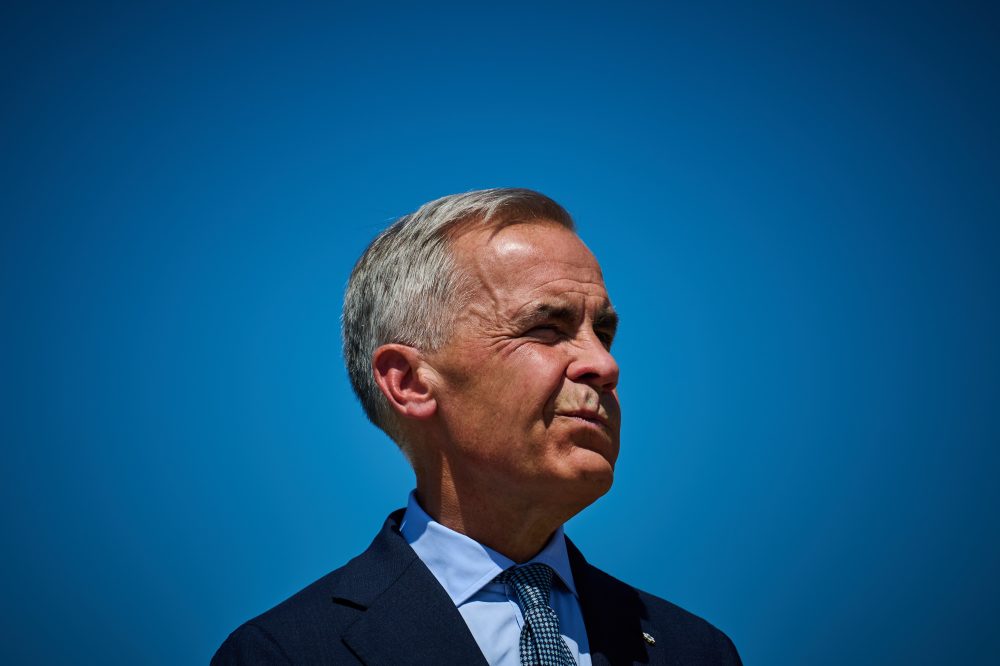
TORONTO (AP) — Canadian Prime Minister Mark Carney said Thursday that trade negotiations with the United States had turned “nasty” after President Donald Trump derided America’s neighbor and its leadership while threatening to expand tariffs.
Carney said Canada remained engaged in the negotiations despite Trump’s comments, describing the talks as a fight to protect Canadian workers and businesses.
“This is a tough negotiation,” Carney said in French. “You can say ‘nasty.’ But this is a question of Canadian jobs. It’s a question of the future of Canadian businesses.”
Trump criticized Canada during a speech Wednesday in Las Vegas.
“Canada’s nasty. They are. They’re nasty,” Trump said. “I love the people, but they’re nasty. Nasty leadership.”
Carney said “we are in the middle of a tariff war with the Americans” but laughed when asked about Trump’s description. He said Canadian negotiators were in Washington this week and that he expected further conversations with Trump after speaking with him last week.
The United States already has tariffs on Canadian steel, aluminum and automobiles. Trump has threatened to impose 50% tariffs on more Canadian goods beginning Aug. 19.
Tariffs are taxes on imports, which companies can then pass along to consumers in the form of higher prices. The president maintains that the costs created by tariffs will cause manufacturing to relocate to the U.S., though there is little evidence of that in the economic data.
Trump’s tariff threats and repeated suggestions that Canada should become the 51st U.S. state have angered many Canadians, prompting many Canadians to cancel trips to the United States.
U.S. Trade Representative Jamieson Greer has argued that Canada and China are the only two countries to retaliate against Trump’s tariffs, citing restrictions on U.S. alcohol sales in some Canadian provinces among his concerns. Canadian officials say their countermeasures were a response to existing U.S. tariffs.
Canada is one of the United States’ largest trading partners, and the move threatens to push prices higher at a time when Americans are already frustrated with the high cost of living ahead of the Nov. 3 midterm elections.
Carney said existing U.S. tariffs on aluminum have contributed to a 58% increase in aluminum prices in the United States.
“That’s not a good situation for American companies,” Carney said.
Brought to you by www.srnnews.com