


By Leika Kihara
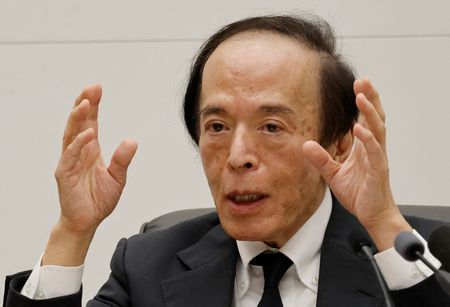
TOKYO, Oct 19 (Reuters) – Bank of Japan Governor Kazuo Ueda said underlying inflation is “quite close” to the central bank’s 2% target with strong global AI demand adding to inflationary pressure from a tight job market, signalling scope for further rate increases.
The remarks came ahead of the central bank’s key policy meeting later this month, where it will release fresh quarterly growth and inflation forecasts which will be scrutinised by markets for clues on the next interest rate-hike timing.
“It is becoming more important to anchor underlying inflation around our 2% target,” Ueda told parliament on Monday.
While rising raw material costs from the Middle East conflict were pushing up inflation, a tight job market and moderate economic recovery were also applying demand-driven price pressure, Ueda said.
“Very strong global AI demand is boosting capital expenditure and exports, thereby pushing up prices for a wide range of goods,” he said.
Ueda also said raising interest rates at an appropriate pace would help avoid spikes in bond yields.
“As underlying inflation approaches 2% and financial conditions remain accommodative, failing to adjust our policy rate appropriately could push up long-term interest rates by stoking market concern over an inflation overshoot,” he said.
The BOJ has a two-day policy meeting that concludes on October 30. Having just raised rates in September, many in the BOJ are cautious about delivering another hike this month and prefer to gauge more data on how past rate increases have affected financial conditions, sources have told Reuters.
Many market players expect the BOJ to keep interest rates steady at 1.25% but drop hints that leave open scope for a hike to 1.5% as early as December.
CONTROLLING DEBT ISSUANCE
Japanese government bond (JGB) yields have risen on prospects of further BOJ rate hikes and concerns that Prime Minister Sanae Takaichi’s big spending plans could worsen the country’s already strained finances.
When asked by an opposition lawmaker about the impact of fiscal spending on inflation, Ueda said increased expenditure would push up price and wage growth by stimulating the economy.
But if increased fiscal spending boosts Japan’s supply capacity, that in turn could help moderate inflation in the long run, he added.
Ueda reiterated that emergency bond-buying would be reserved for episodes of sharp yield rises or serious market dysfunction.
Speaking in the same parliament session, Takaichi dismissed suggestions by some analysts that her administration’s policies had triggered the selloff in the yen and JGBs.
“We will meticulously scrutinise the size of fiscal spending and appropriately control the size of debt issuance,” Takaichi said. “By creating a strong economy, Japan can heighten market trust in the yen,” she added.
The JGB market has steadied after the administration sought to dispel perceptions of a reflationist agenda. But analysts expect renewed turbulence if the government fails to clarify how it would fund its tax-cut and big spending plans.
The International Monetary Fund last week urged the BOJ to keep raising interest rates, and for the government to lay out a medium-term fiscal framework to soothe market jitters.
“Markets are concerned about the fiscal risks because of the uncertainty” on how Japan would pay for the fresh spending and tax-cut plans, Krishna Srinivasan, director of the IMF’s Asia and Pacific Department, told Reuters.
(Reporting by Leika Kihara; Editing by Christopher Cushing, Lincoln Feast and Shri Navaratnam)
Brought to you by www.srnnews.com