

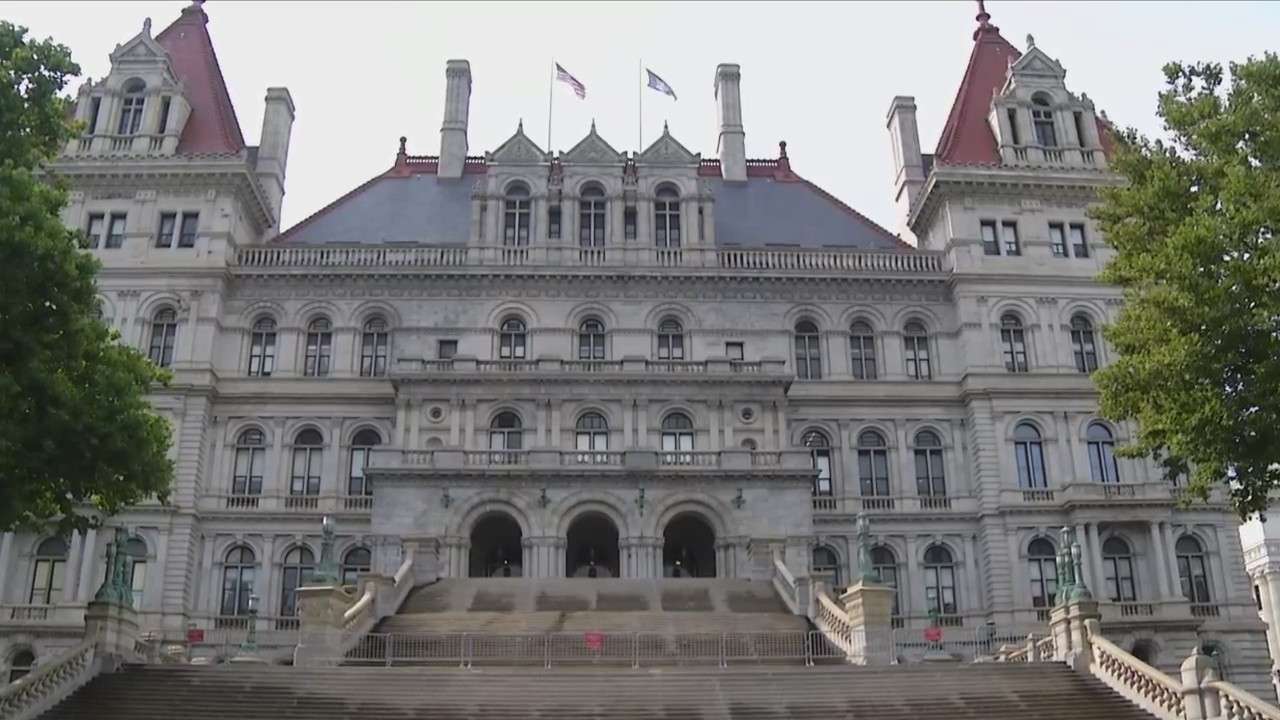
ALBANY, N.Y. — The New York State Legislature has passed an 11th deadline extension to the state budget, which is nearly six weeks late amid debates over multiple issues.
The 11th extender passed on Monday, according to State Senator Tom O’Mara, who represents parts of Steuben, Yates, and other Western New York counties. He says the State Senate is no further along on the budget than they were last Thursday. That’s the day that Gov. Kathy Hochul and the state assembly speaker issued conflicting statements over how close they were to reaching a deal. Hochul said lawmakers had reached a “general agreement”, but later, Speaker Carl Heastie said there was no deal.
The budget delay is causing some issues locally. Several school districts, including the Rochester City School District, told News10NBC that the delay is making it difficult to plan finances for the next school year.
Albany has delayed the budget because of debates over a proposal aiming to lower car insurance rates, the state’s clean energy goals, and immigration policies. Here’s our coverage of those issues:
Plan to lower car insurance rates
Hochul is pushing for a proposal that aims to lower car insurance rates through lawsuit reform and tackling insurance fraud. However, some lawmakers have expressed concerns over how Hochul’s proposal would cap pain and suffering damages.
The governor’s plan includes cracking down on staged accidents, such as when a driver cuts off another car and then stops abruptly, intentionally causing a rear-end crash. New Yorkers pay some of the highest car insurance rates in the nation, around $4,000 on average, and Hochul says fraudulent insurance claims have contributed.
Hochul says her plan would ensure that, when a driver is found mostly at fault for a crash, they can’t claim outsized payments for damages. Assembly Member Jen Lunsford claims the governor has “repeatedly misstated” what this change would do, saying it would prevent drivers found over 50% at fault from suing for any damages. In a statement, Lunsford said:
“This changes our modified comparative negligence rules to pure comparative negligence, which means that anyone found 51% at fault for an accident cannot sue for anything beyond what is covered for any driver under our no-fault law, which you can claim without a lawsuit. So you can collect the $50,000 of coverage for medical and lost wages– coverage that is provided to every driver as part of their no-fault policy that you receive through your own insurer, regardless of fault. But if you exceed $50,000 in medical and lost wages (which could happen in the emergency room if you have to have surgery) you cannot bring a lawsuit for anything more than that if you found 51% or more at fault.”
Hochul says her policy would also:
- Better define what constitutes a ‘serious injury’ so that damages for pain and suffering or emotional distress are reserved for those who can demonstrate that they’ve suffered a serious injury.
- Prevent insurance companies from raising rates by setting a legal threshold that prevents excess profits and returns savings to consumers.
- Create new regulatory safeguards to prevent insurance companies from raising rates without seeking approval from the Department of Financial Services.
- Prohibiting insurance companies from setting rates based on extraneous, personal factors like homeownership status, occupation, education level, or zip code.
- Ordering state agencies, including New York State Police and the Department of Motor Vehicles, to combat fraud and staged crashes.
Lunsford said three of these provisions (preventing insurance companies from raising rates, regulatory safeguards for rates, and prohibiting insurance companies from setting rates) weren’t part of the governor’s original plan that the assembly took issue with. She claims that nothing in the governor’s original plan would have made a significant difference in rates to consumers. In a statement, she said:
“There were no assurances that savings would be passed on, and nothing stopped the insurance company from eating any savings with year over year increases they were able to make without permission.”
Hochul’s plan also calls for capping payouts for drivers engaged in criminal behavior at the time of the crash, including uninsured drivers, drunk drivers, and drivers committing a felony. That means drivers engaged in illegal behavior would face a $100,000 cap on non-economic damages.
News10NBC’s Deanna Dewey explained how this could play out in a real-world scenario. Imagine someone sitting at a red light and getting rear-ended by a drunk driver. The accident is so serious that the driver of the car that was rear-ended suffers a spinal cord injury and paralysis. But if the victim was driving without car insurance, he was technically engaged in criminal behavior at the time of the accident. So even though the driver suffered a life-changing injury, his damages for pain and suffering would be capped at $100,000. You can read more here.
Immigration policies
Hochul is pushing for some policy changes over how federal immigration agents can operate in New York State. The governor says these policies would:
- Establish the ability to sue federal, state, and local officials, including ICE officers, for constitutional violations.
- Deny ICE permission to enter sensitive locations, including schools, libraries, health care facilities, polling locations, and homes, without a judicial warrant.
- Ban federal, state, and local law enforcement from wearing masks while on duty.
- Prohibit the use of state, local, or school civil resources, including employee time, for civil immigration enforcement activities.
- Codify the right to a free public education regardless of immigration status.
Hochul said she wanted to strengthen protections for migrants in New York State due to the Trump administration’s federal immigration crackdown. Assembly Member Josh Jensen said he’s concerned about the governor’s proposals, since they could limit when local law enforcement can cooperate with federal immigration authorities, like ICE and Border Patrol.
“Certainly, when we look at the role that law enforcement plays, they need to be able to respond to any situation they encounter and vice versa,” Jensen said.
State rebate for energy
Hochul is pushing for a one-time rebate to New Yorkers to address rising energy costs. It would total $1 billion. The governor also says the budget includes a “ratepayer protection plan” that aims to lower bills. That includes:
- Tying executive pay directly to customer affordability.
- Requiring utilities to present a budget-constrained option that keeps their operating and capital costs below the rate of inflation when requesting a rate increase to ensure efficiency and affordability are prioritized.
- Ensuring customers do not foot the bill for hidden costs like lobbying, political contributions, and unnecessary executive travel.
The rising cost of electricity has prompted more than 30 state lawmakers to urge Hochul to declare an “energy state of emergency.” News10NBC has spoken with RG&E and NYSEG customers who experienced sticker shock this winter. Since the winter was colder than average, it forced utility companies to buy more energy on the open market at a much higher price. Those costs are then passed on to consumers.
Funding for childcare
Hochul is pushing for $1.7 billion in funding to make childcare more affordable in the budget. That would bring the state’s total funding for childcare and pre-kindergarten services this fiscal year to $4.5 billion. The governor says the funding would:
- Make Pre-K universal statewide, with funding to make Pre-K seats available for all 4-year-olds in New York by the start of the 2028-29 school year.
- Enhance the Child and Dependent Care Tax Credit to help defray childcare expenses for 230,000 New York families, providing an average benefit of $576.
- Support the development of New York’s ‘First 3’ program, which will partner with counties to offer child care to children 0-3, regardless of income.
- Fund the Child Care Assistance Program and deliver childcare to tens of thousands of additional New Yorkers, which is capped at $15 a week for most families.
- Support the child care workforce through early childhood educator preparation.
In September, News10NBC spoke with parents who feared losing childcare benefits as state funding was running out in 12 counties. That included an Orleans County mother who said she would go from paying $4 a week to $500 a week for daycare. Our investigation found the letters that the state was sending to local parents, telling them their child care benefits were “discontinued due to lack of funds.”
Debate over state’s clean energy goals
For months, Albany lawmakers have debated whether to course on the state’s clean energy goals. The Climate Leadership and Community Protection Act (CLCPA) requires that the state generate 70% of its electricity from renewable sources and reduce its emissions by 40% by the year 2030.
However, at an event in Rochester, Hochul said she wanted to delay the timeline due to the cost to energy customers. She said financial challenges like the pandemic, inflation, and tariffs have made the goals set in 2019 unrealistic.
The electric school bus mandate, requiring districts to stop buying new diesel buses in 2027 and stop using all diesel buses by 2035, has also been a hot-button topic in Albany. This week, Senate Democrats blocked a bill that would have repealed New York’s electric school bus mandate.
Only a handful of school districts in the Rochester area have started transitioning to electric buses. Gates-Chili has the most in the area with 15 electric buses. Gates-Chili leaders say the buses work well because their routes are short and densely populated. However, leaders in the Naples school district, a more rural area where homes are spread out, said electric buses are more expensive to run — anywhere from five to eight times as much as diesel.
News10NBC has also done several stories about concerns that there’s currently not enough electricity available on the grid to power electric school buses.
The post Albany passes 11th extension to state budget, now nearly six weeks late appeared first on WHEC.com.