

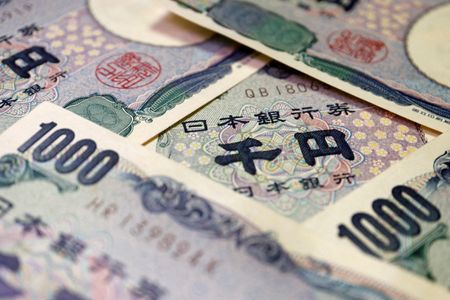
Jan 26 (Reuters) – Japan’s yen is surging and dragging down the dollar across markets, as rate checks have investors on high alert over the risks of the first joint U.S.-Japan currency intervention in 15 years.
After leaping on Friday, when the New York Federal Reserve contacted traders to check rates, the yen has rallied a further 1.2% to 153.89 in Asia trade on Monday. [FRX/]
The euro is at four-month highs and precious metals such as silver and gold have soared to record peaks above $100 and $5,000 an ounce.[MKTS/GLOB]
Here is what investors and analysts are saying about the market moves:
HARUNA TANAKA, CHIEF MANAGER AT TREASURY AND SECURITIES DIVISION, SAITAMA RESONA BANK, TOKYO
“I can not say whether there will be an intervention in the near future, but right now it seems that market players are unwinding their short positions, betting that the yen will not hit 160 to the dollar. In the long run, the yen and the dollar move sideways because of the corporate demand for the dollar.”
TIM KELLEHER, HEAD OF INSTITUTIONAL FX SALES, COMMONWEALTH BANK AUSTRALIA, AUCKLAND
“That’s the first time the Fed has checked a currency in more than a decade. They’ve threatened before, but to physically go and do it is a big change in their MO.
“We’re under a new regime … we’ve seen an anti-U.S. dollar move. There is random talk of a Plaza Accord 2.0, which would matter, and signal a weaker USD.”
DAVID FORRESTER, SENIOR STRATEGIST, CREDIT AGRICOLE, SINGAPORE
“There is potentially something larger at play here. The threat of intervention reflects a broader investor concern that Japanese and U.S. authorities would like a weaker USD. This combined with Trump’s erratic policymaking, including the threat of 100% tariffs on Canadian exports if it signs a trade deal with China, is weighing on the appeal of USD assets.”
MOH SIONG SIM, FX STRATEGIST, OCBC, SINGAPORE
“It sends a strong signal … I think the market will take it more seriously as opposed to if it’s just the Ministry of Finance or Bank of Japan checking rates. Because it’s rare for the U.S. to get involved, and you can see this as somewhat of a coordinated attempt or effort to rein in the yen weakness.
“The weak yen has become problematic … in the sense that it’s unpopular with the public, because the weak yen is seen as contributing to the inflation problem. So perhaps … this intervention threat itself is an attempt to check the yen weakness and prevent it from becoming a political issue.”
JASON WONG, SENIOR MARKET STRATEGIST, BNZ, WELLINGTON
“It’s a continuation of last week’s trends. JPY is stronger as intervention risk overhangs, and short positions in yen are squeezed. USD risk premium is continuing to rise as investors balk at U.S. policy direction.”
EUGENE EPSTEIN, HEAD OF TRADING AND STRUCTURED PRODUCTS, MONEYCORP, NEW JERSEY
“It’s more driven by the fact that the Fed and the Treasury are seemingly involved in the background. You can make the argument that the fact that the Treasury intervened in the Argentinian peso not that long ago shows that they’re serious about these types of things and it’s not just verbal intervention.
“I know Argentina is not Japan, but nonetheless, the fact that the Treasury actually intervened in another currency pair rather forcefully showed pretty clearly that they’re not going to hesitate to act. So when they were rate checking in dollar/yen, everybody’s ears perked up and the market realised that they have to be taken seriously.”
MARC CHANDLER, CHIEF MARKET STRATEGIST, BANNOCKBURN CAPITAL MARKETS, NEW YORK
“Dollar/yen is the big move, but we’re seeing follow-through dollar selling across the board. So this is not just a yen move.
“There are a lot of things going on right now in the U.S. like the protests against the latest Minnesota shooting. Trump could also be naming the successor to Jay Powell this week. So the markets are nervous about both.
“The dollar has been fragile anyway, but the gain in the yen has been the precipitating trigger for the market to sell it across the board.”
MASAHIKO LOO, SENIOR FIXED INCOME STRATEGIST, STATE STREET INVESTMENT MANAGEMENT, TOKYO, IN A CLIENT NOTE
“Should joint FX intervention materialise, the probability of a spring BOJ rate hike rises materially. Any backing from the U.S. Treasury would likely be conditional on a pulled‑forward BOJ hike and continued policy normalisation, while reinforcing U.S. Treasuries as Japan’s core long‑term reserve asset.
“Bottom line: this is shaping up as a controlled, policy‑engineered reset. The risk of a disorderly, systemic yen‑carry unwind recedes significantly. The message is discipline and coordination – with a credible soft cap at 162.”
JOEY CHEW, HEAD OF ASIA FX RESEARCH, HSBC, SINGAPORE, IN A CLIENT NOTE
“Considering how joint intervention took place quite frequently over a protracted period in May 1989 – April 1990, we should not assume U.S. involvement is necessarily a game-changer or a panacea for the JPY’s weakness.”
PRASHANT NEWNAHA, SENIOR ASIA-PACIFIC RATES STRATEGIST, TD SECURITIES, SINGAPORE
“Takaichi’s jawboning and Mimura’S limited commentary but confirmation that the (finance ministry) is in close contact with the U.S. Treasury means the market is unable to rule out FX intervention by both Japan and the U.S. The market’s inclination is to short the yen but the possibility of coordination means it no longer is a one-way bet.”
CARLOS CASANOVA, ASIA SENIOR ECONOMIST, UBP, HONG KONG
“The appeal of recent short yen positions appears to be diminishing due to the presence of two-sided risks. The mere expectation of potential intervention could, in itself, contribute to some strengthening of the currency.
“The Japanese yen is likely to stabilize to some extent – though the catalysts for significant appreciation remain limited – while long-term yields are expected to face continued pressure at their current elevated levels.”
(Reporting by Reuters markets team in New York and Asia; Compiled by Tom Westbrook; Editing by Shri Navaratnam)
Brought to you by www.srnnews.com